Shared origin
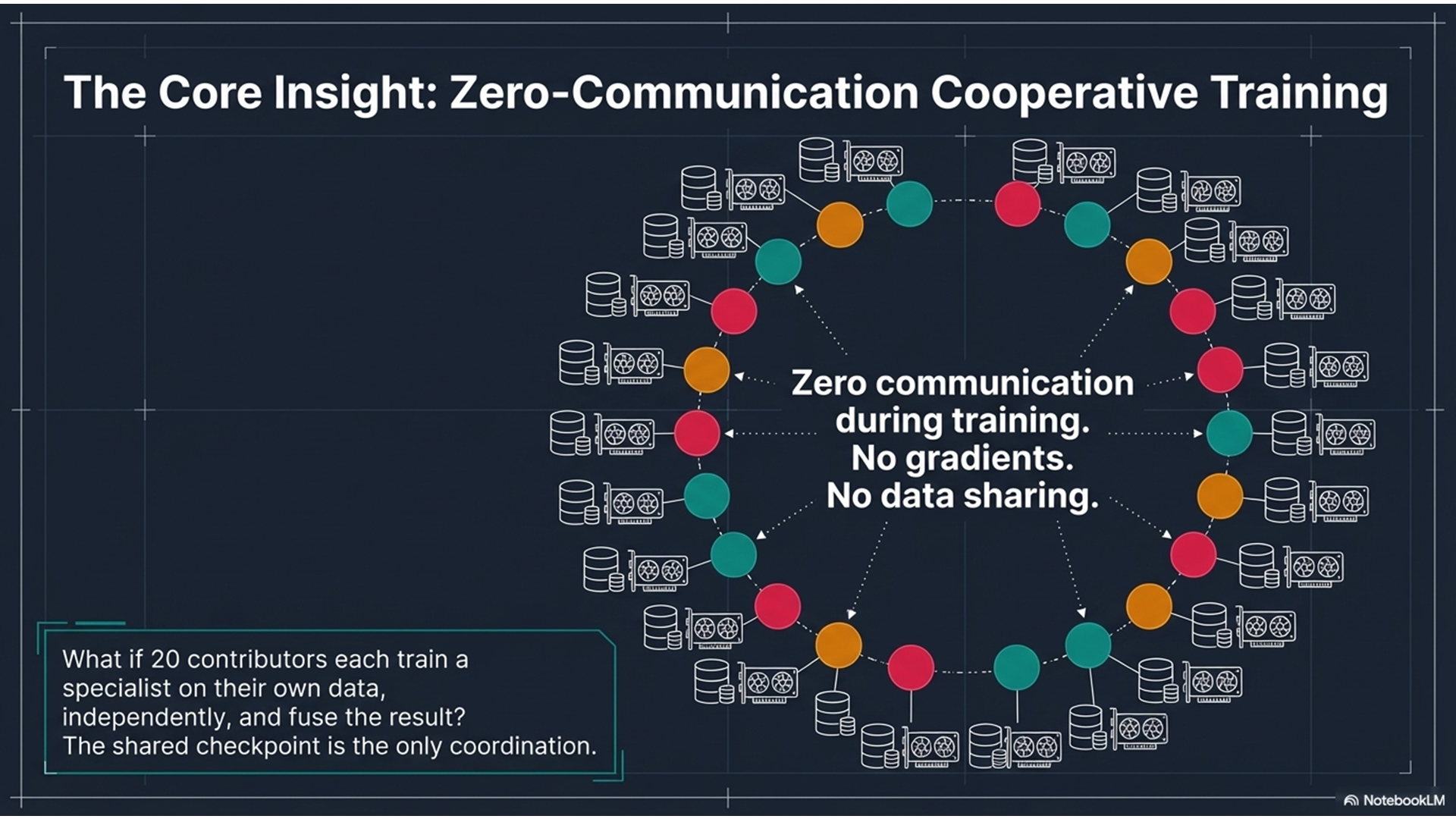
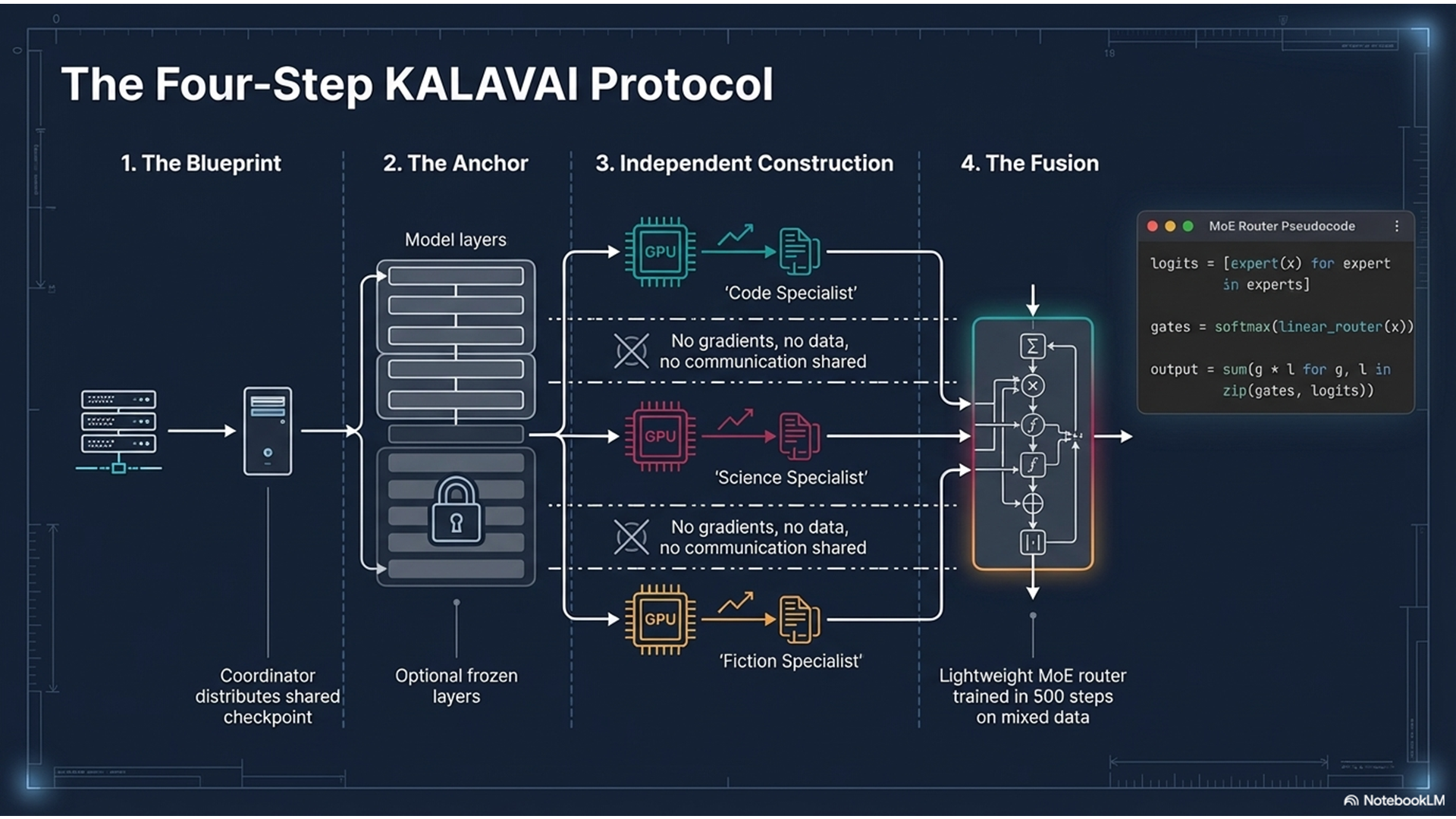
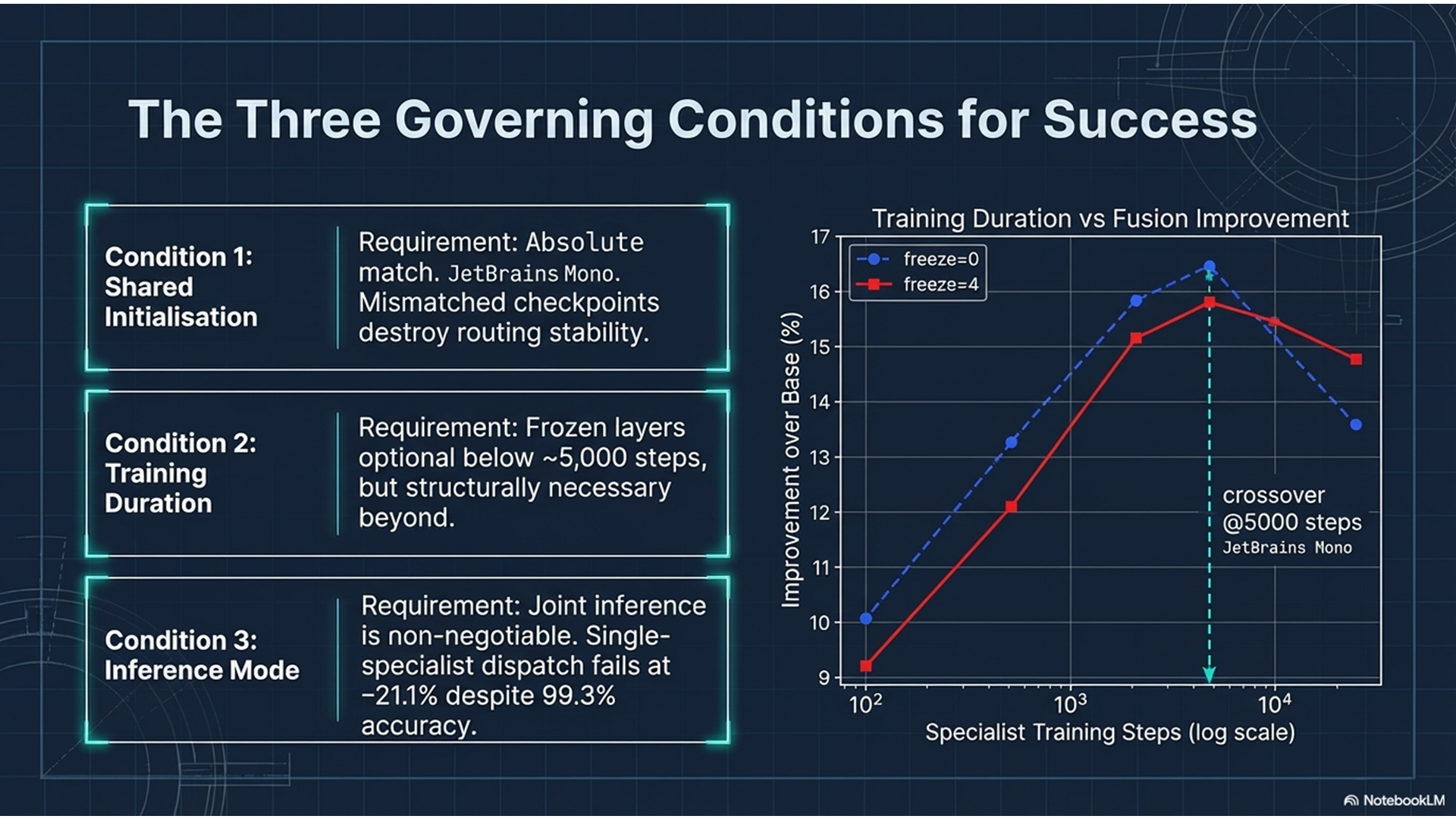
All specialists start from the same checkpoint, preserving enough representational compatibility for post-hoc fusion.
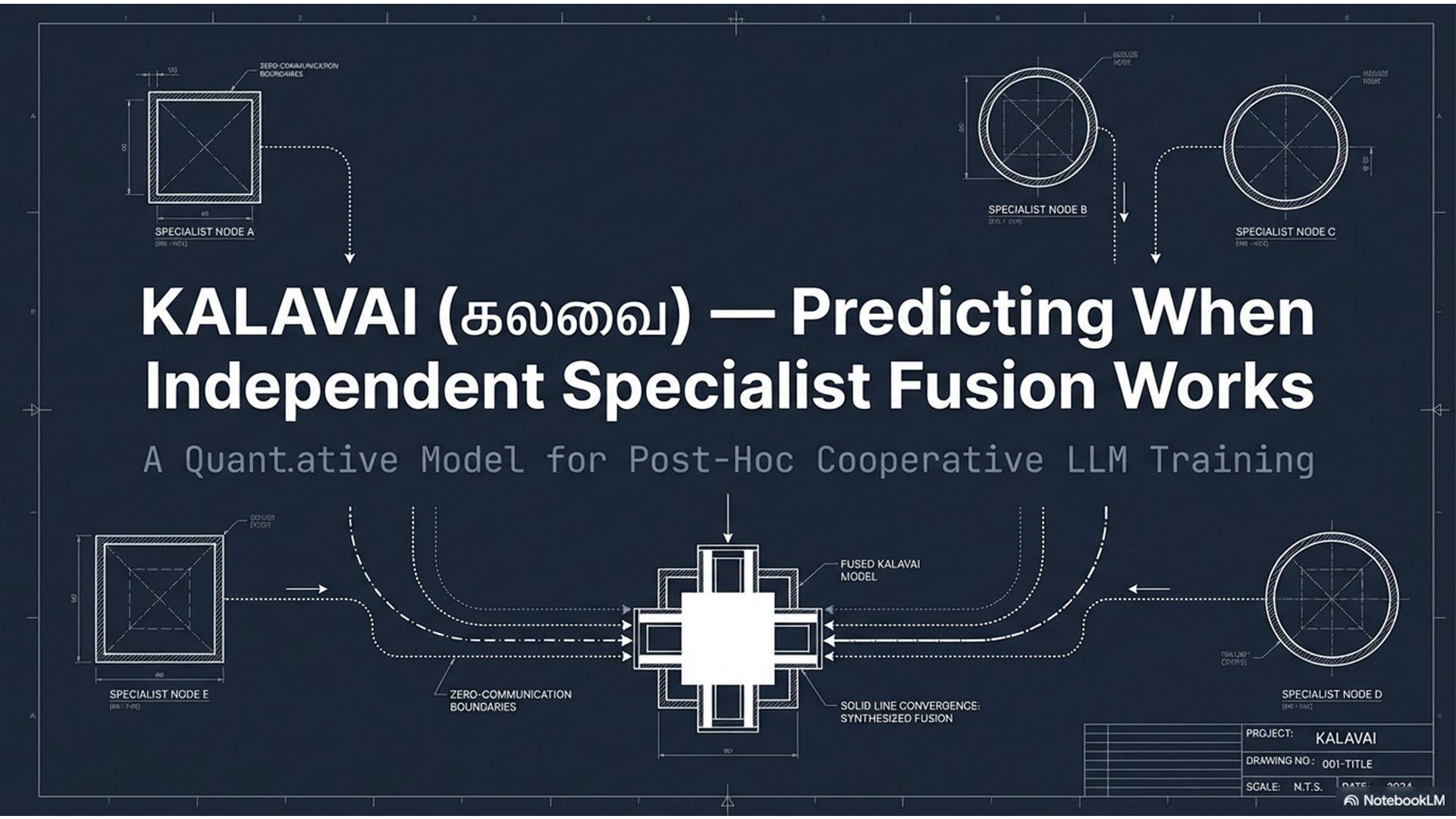
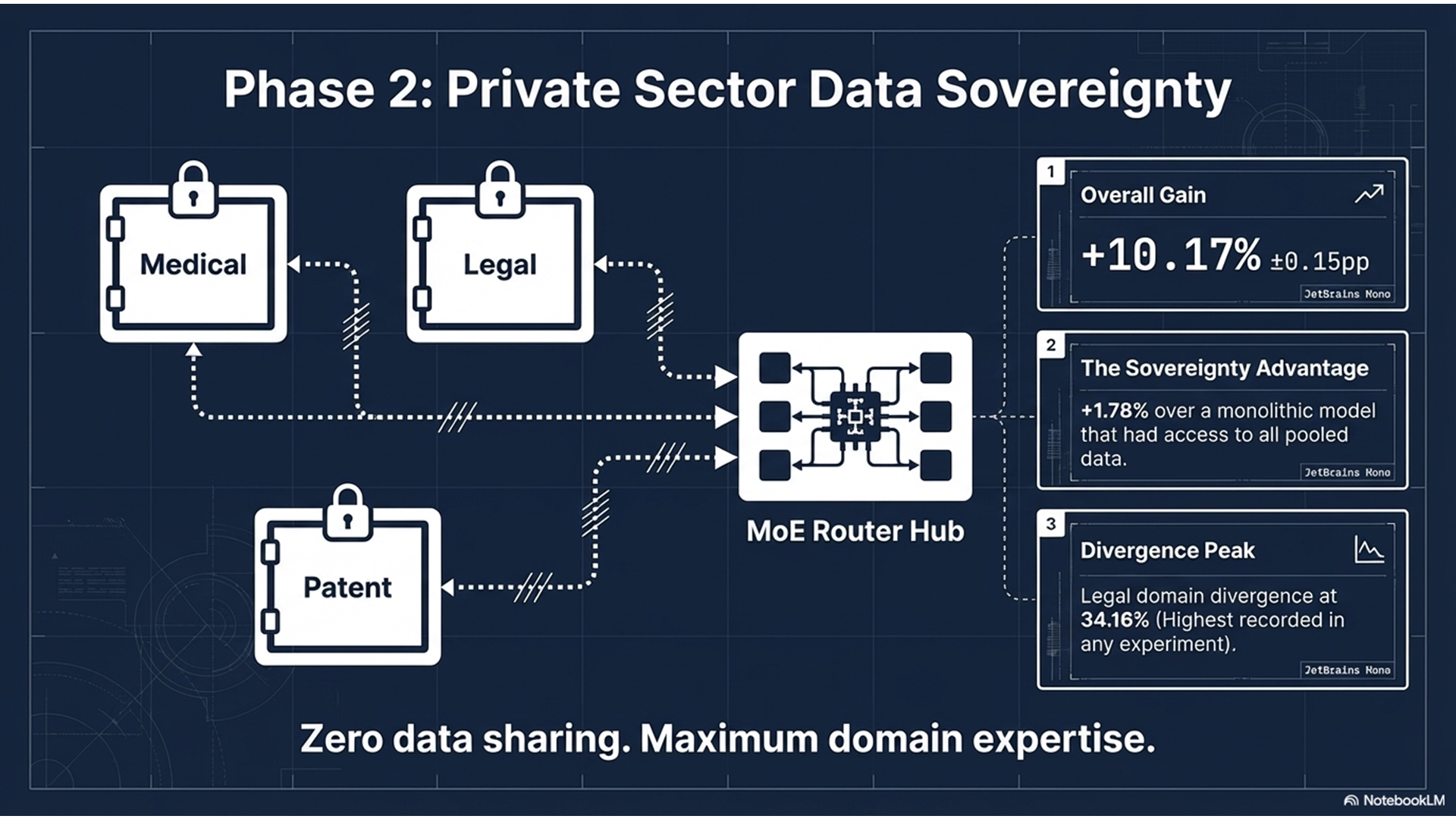
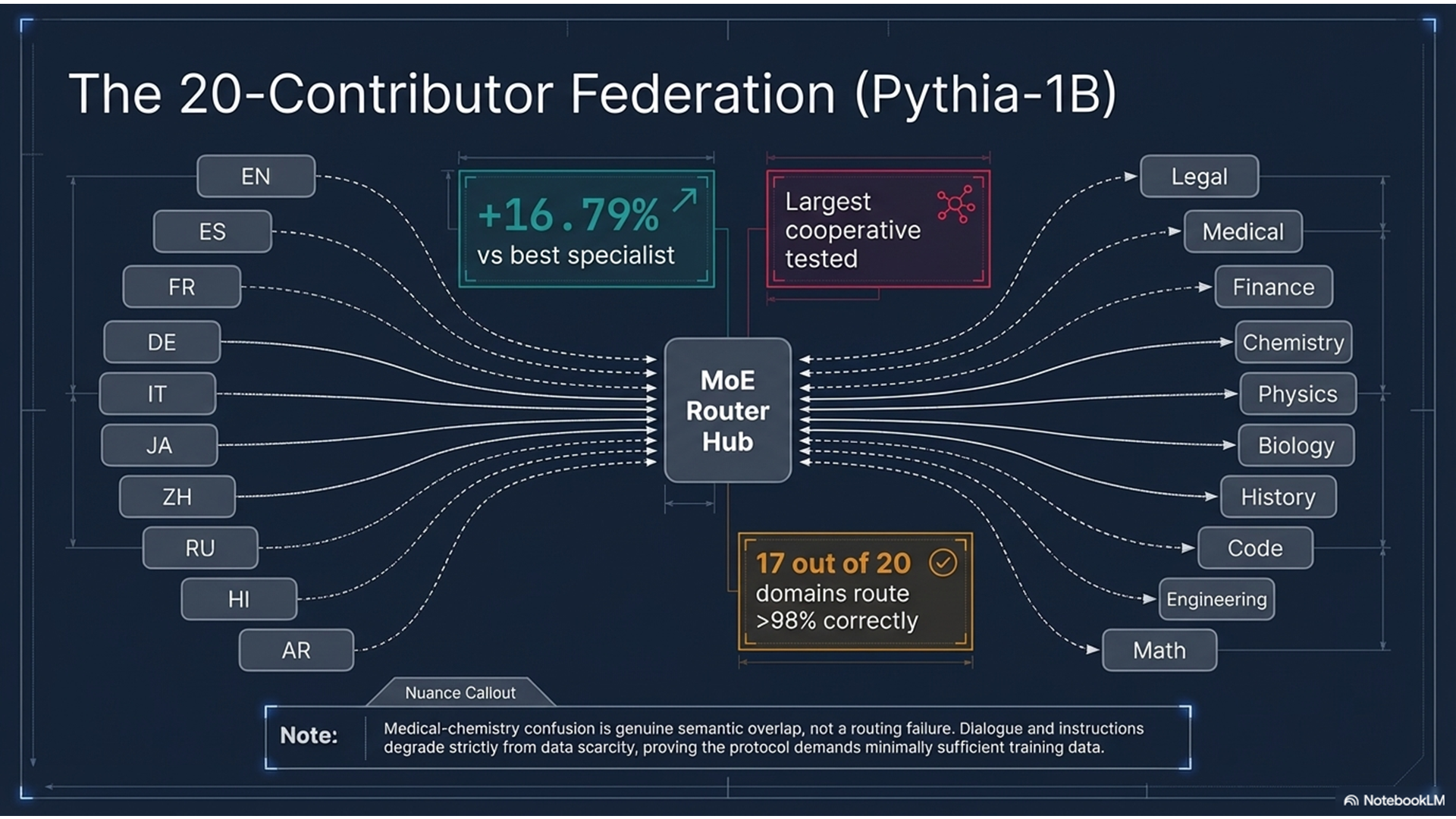
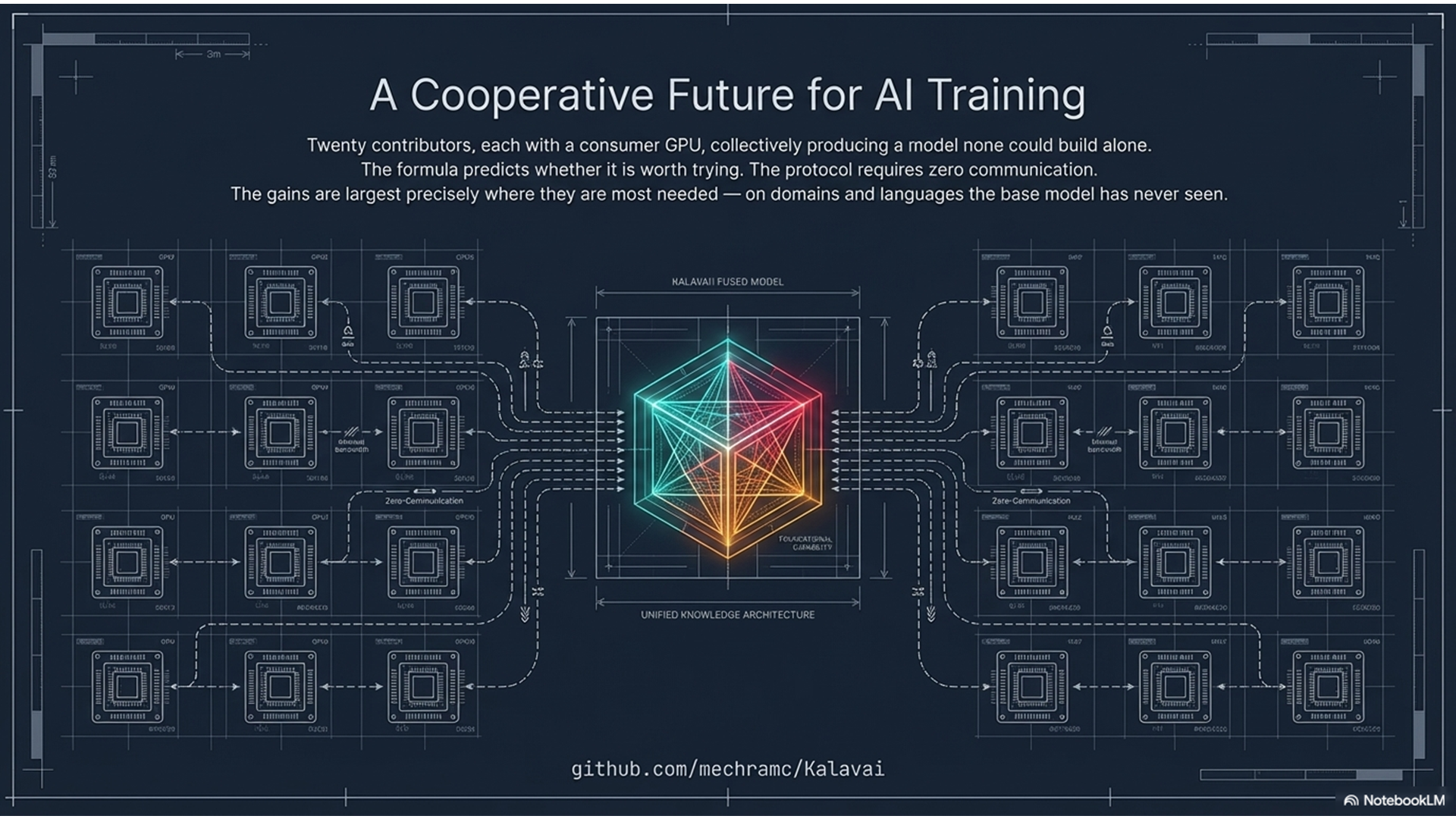
A protocol for building one routable model from independently trained specialists. Shared initialization. No communication during training. Lightweight routing after the fact.
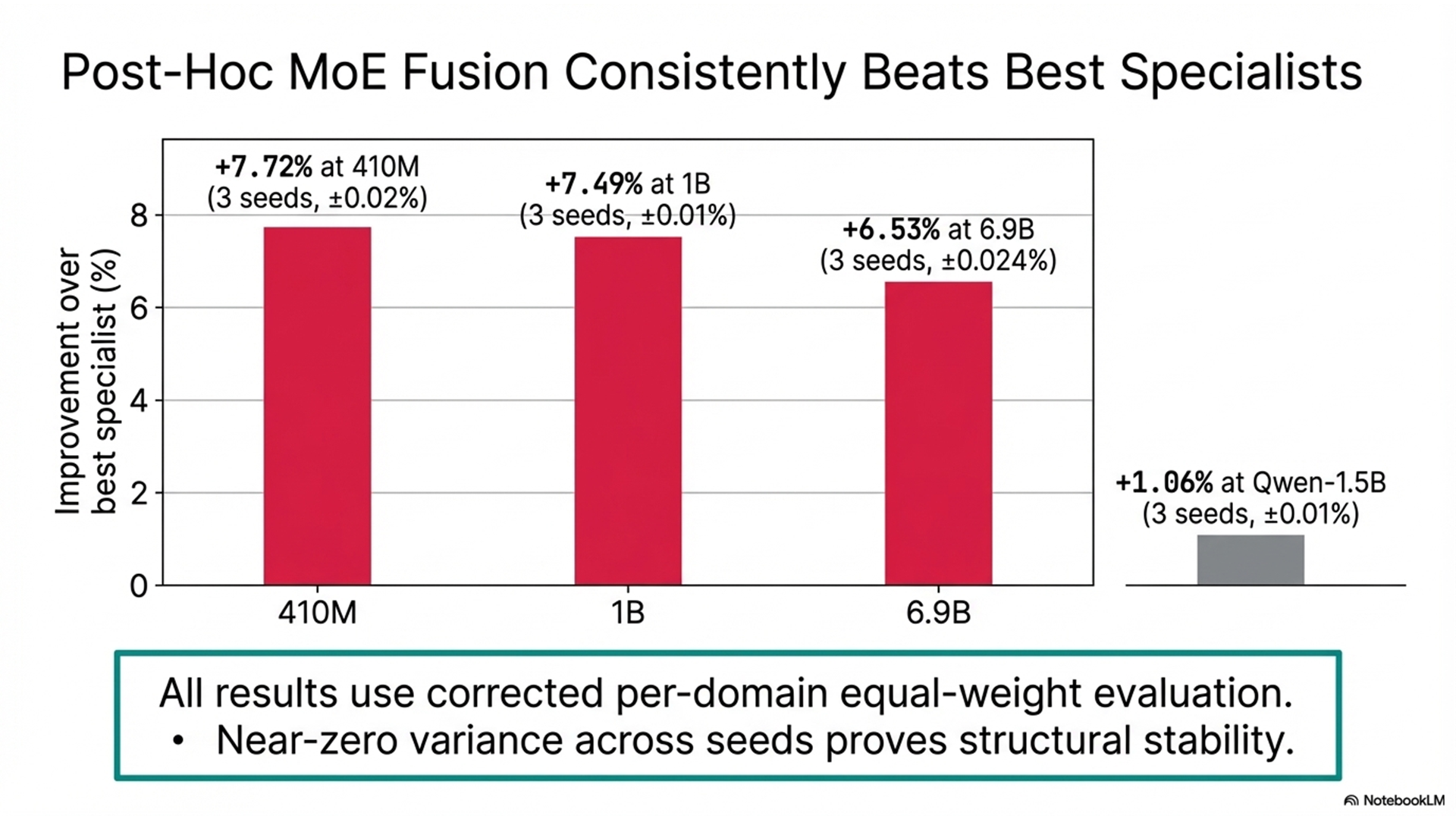
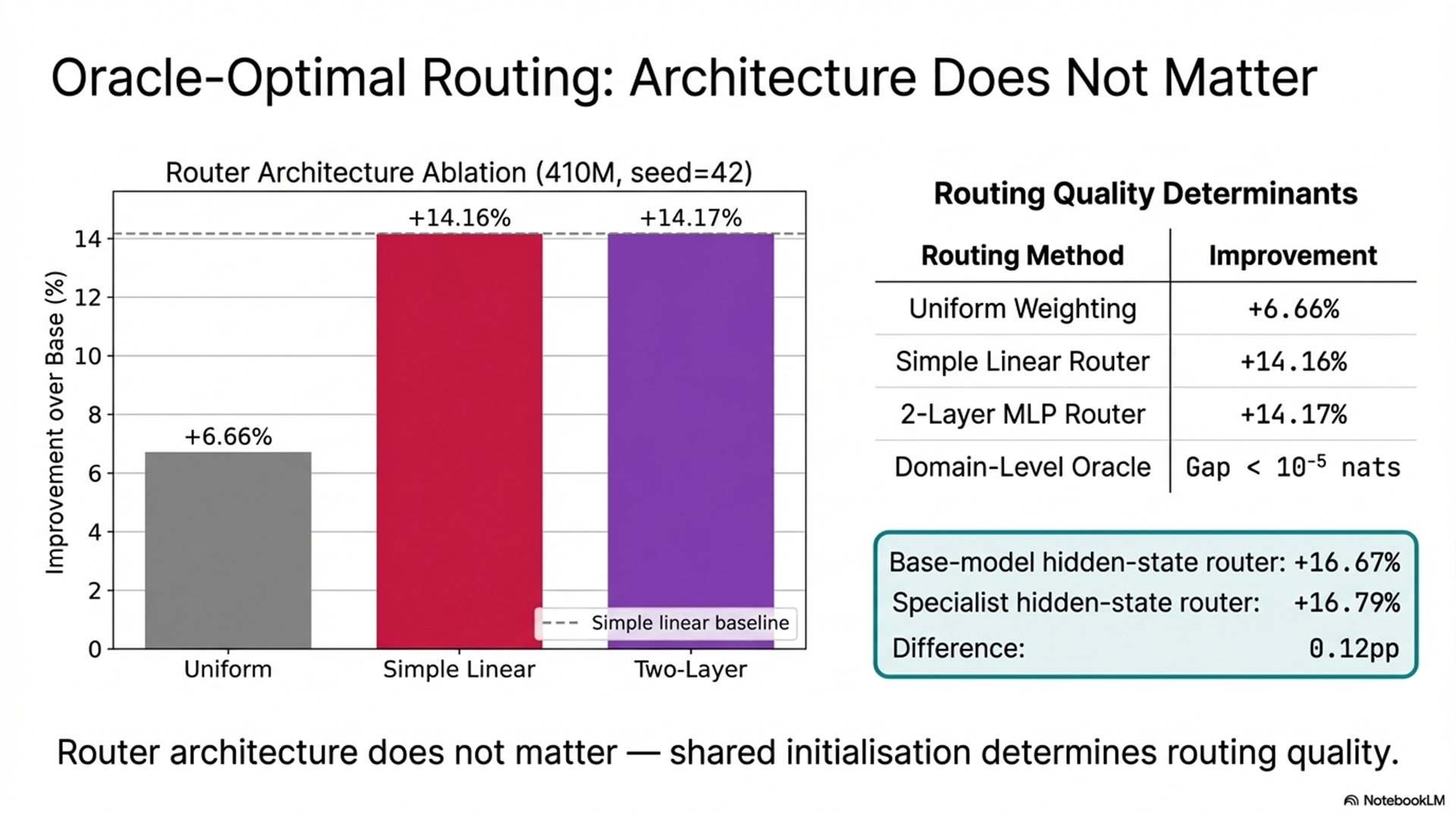
KALAVAI treats cooperation as a routing problem. Specialists diverge from a shared base; the fused model learns when each divergence is useful.
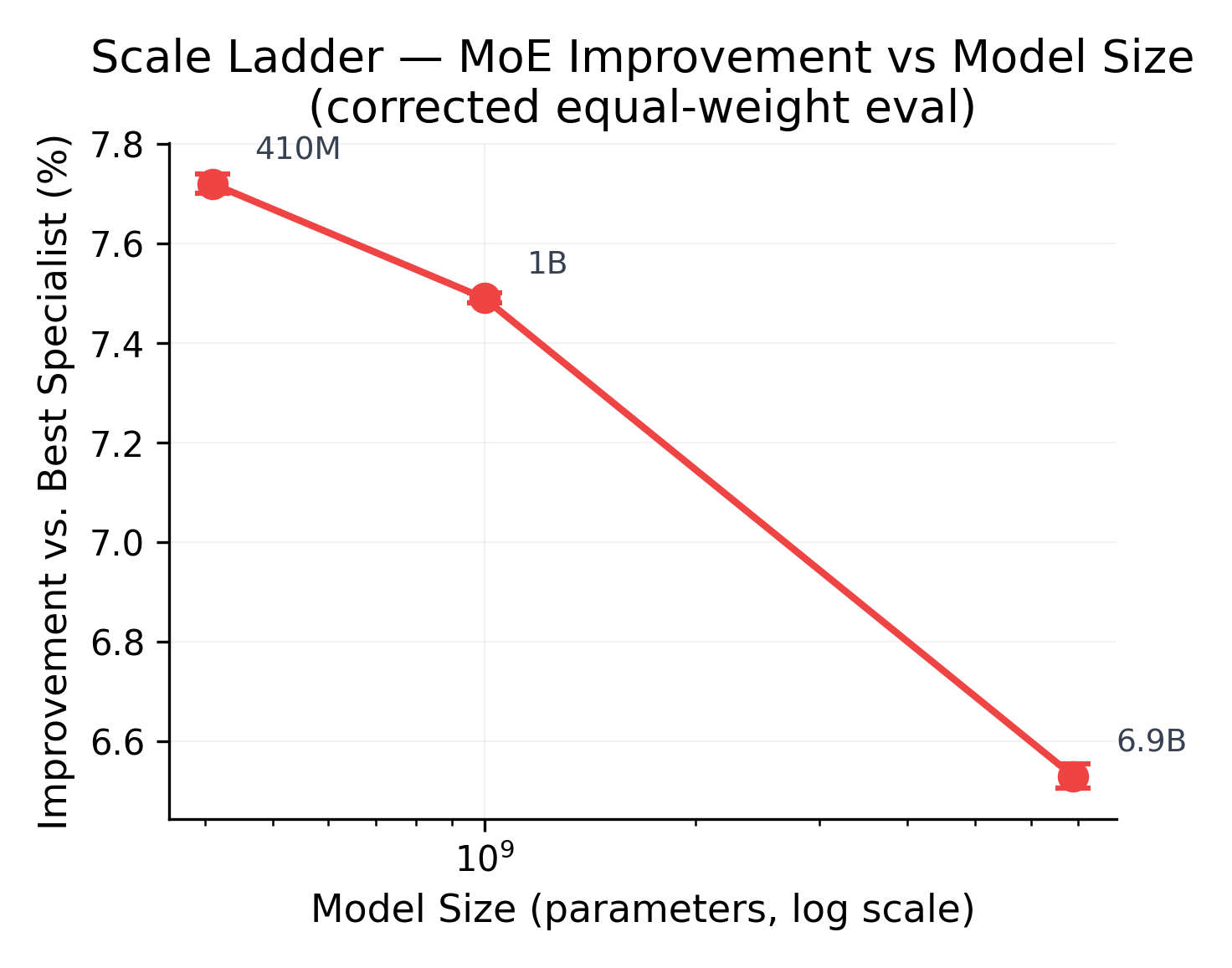
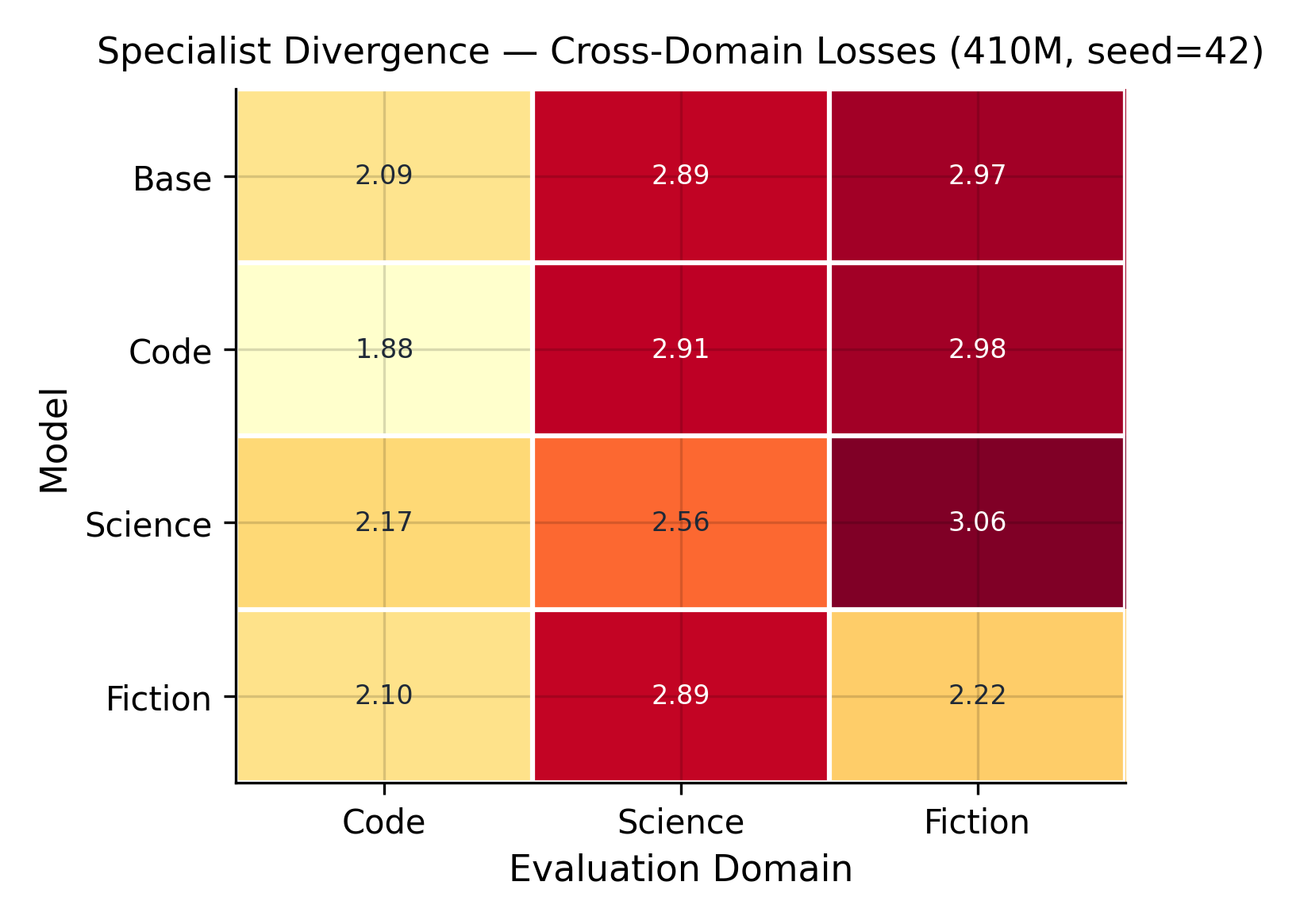
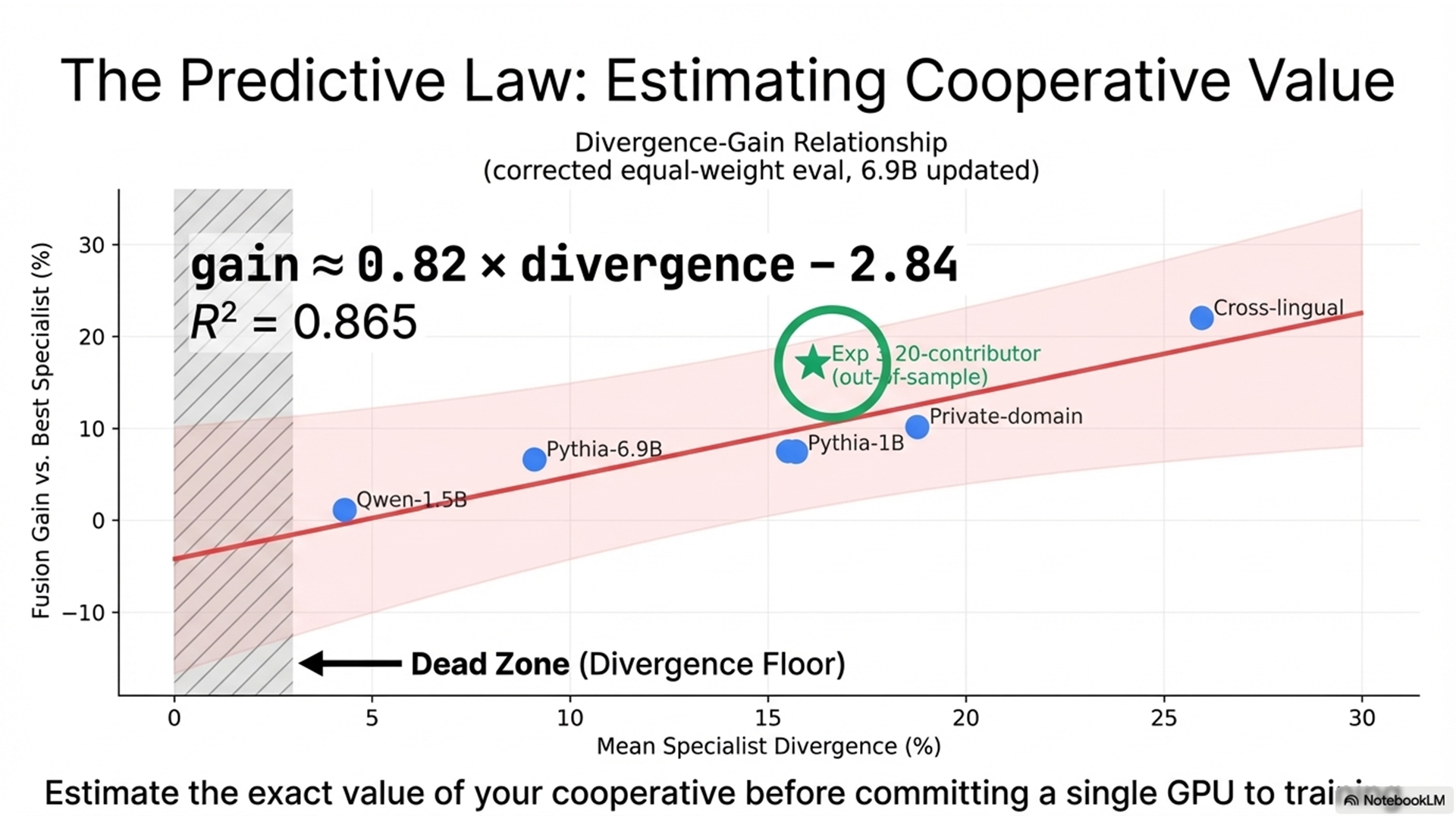
The core result is not just that fusion can work. It is that a practical measurement, mean specialist divergence from the base model, predicts whether the cooperative is worth building before full evaluation.
All specialists start from the same checkpoint, preserving enough representational compatibility for post-hoc fusion.
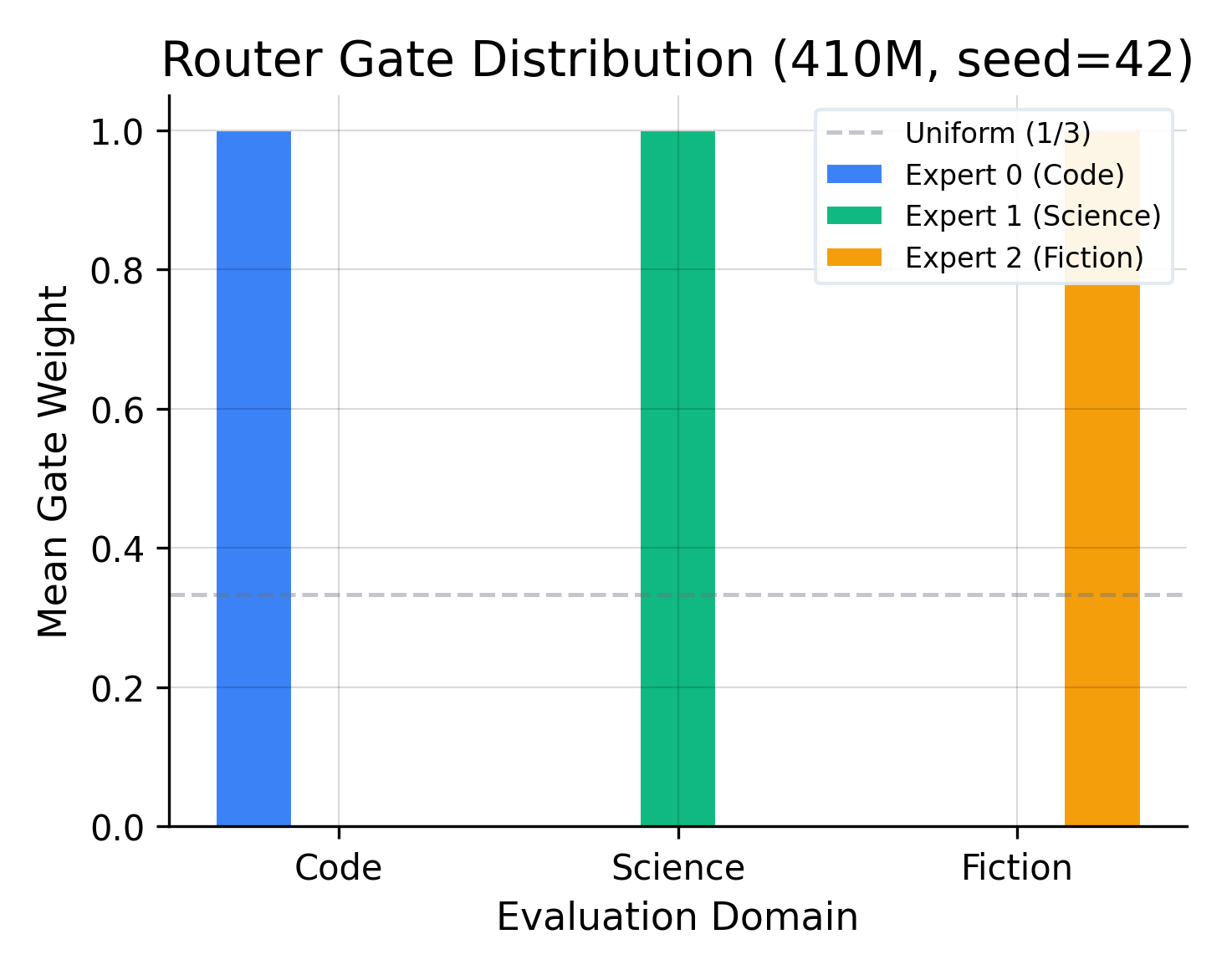
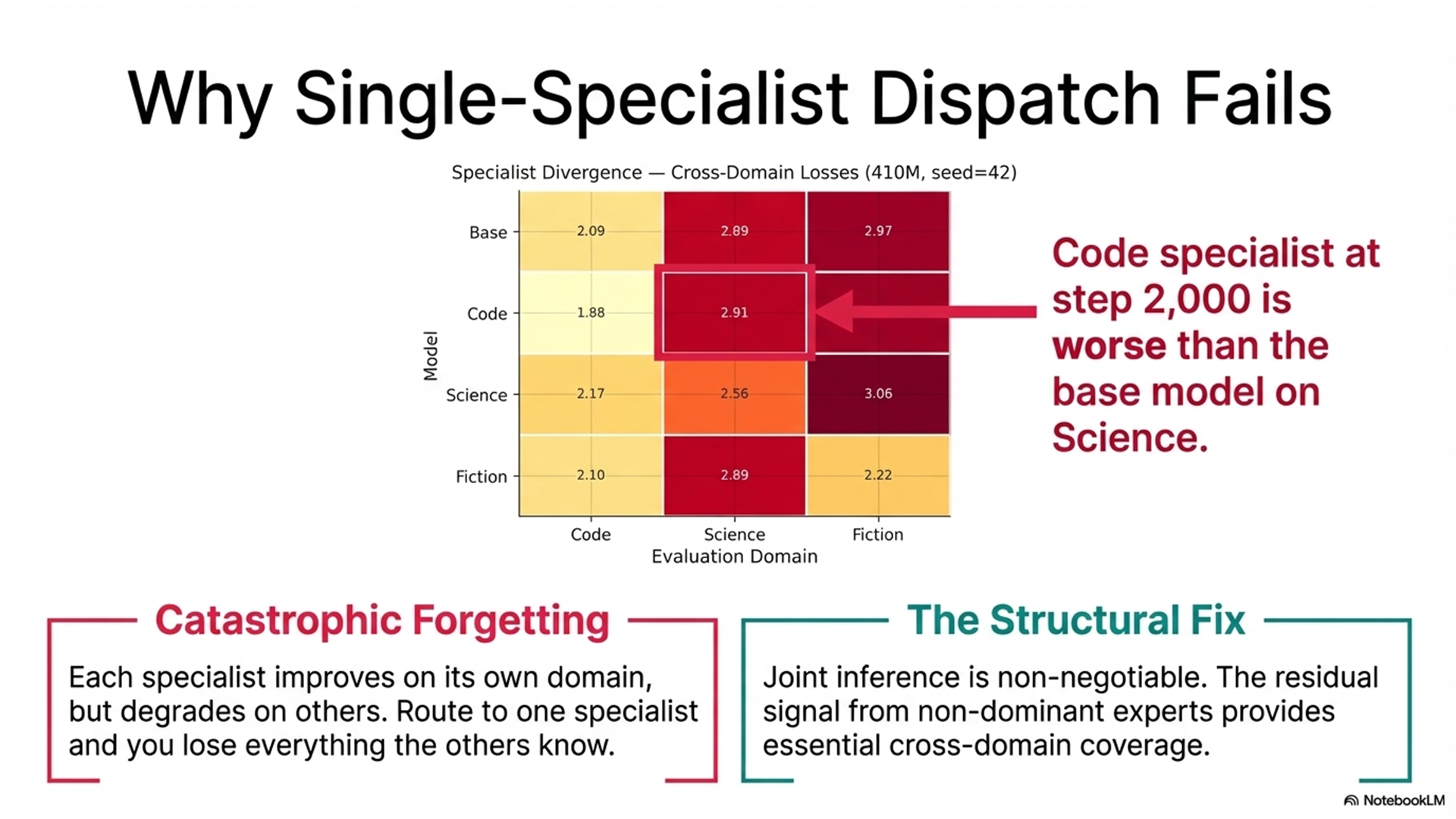
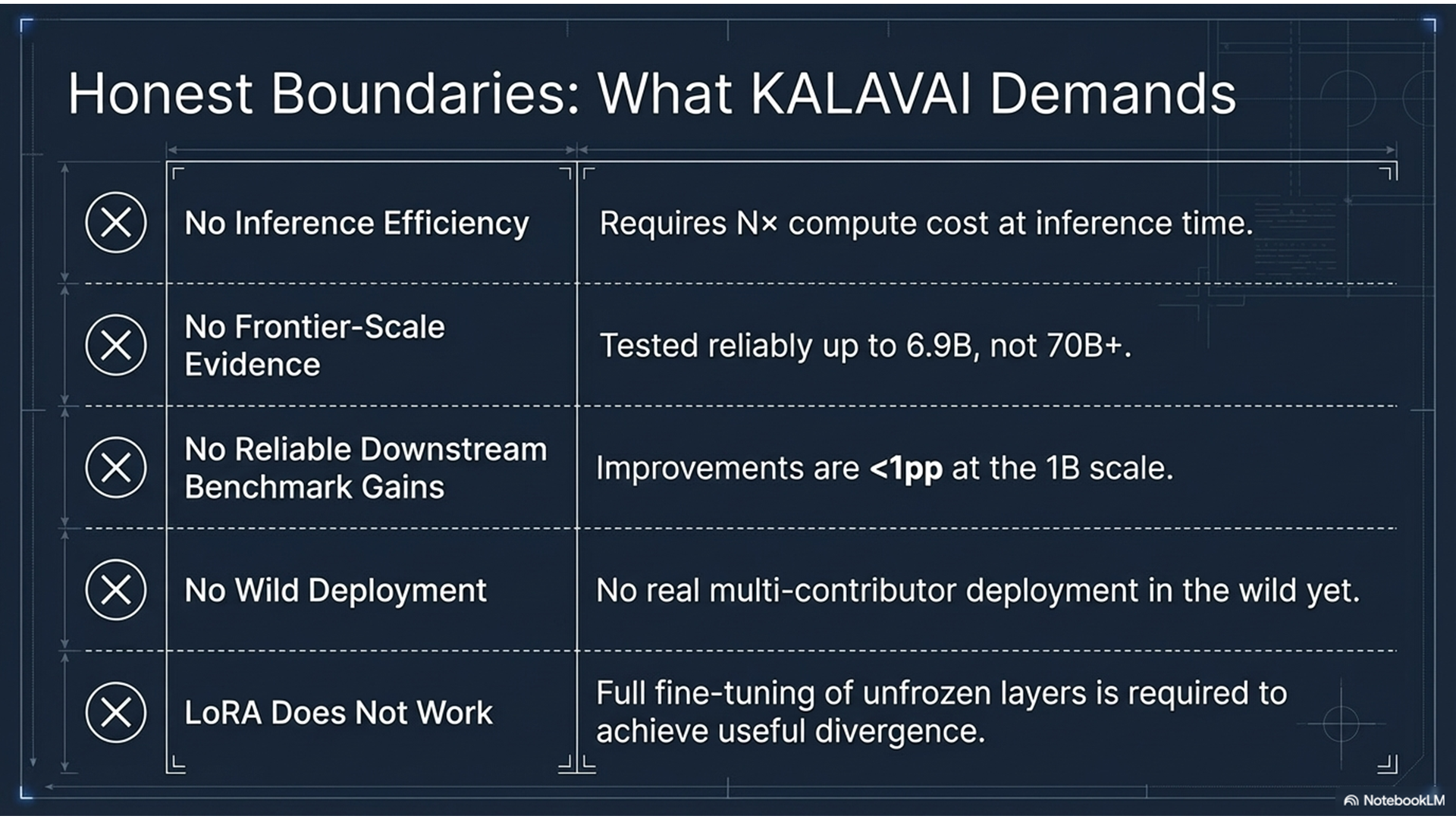
All specialists run at inference. Single-expert dispatch fails because each specialist forgets outside its domain.
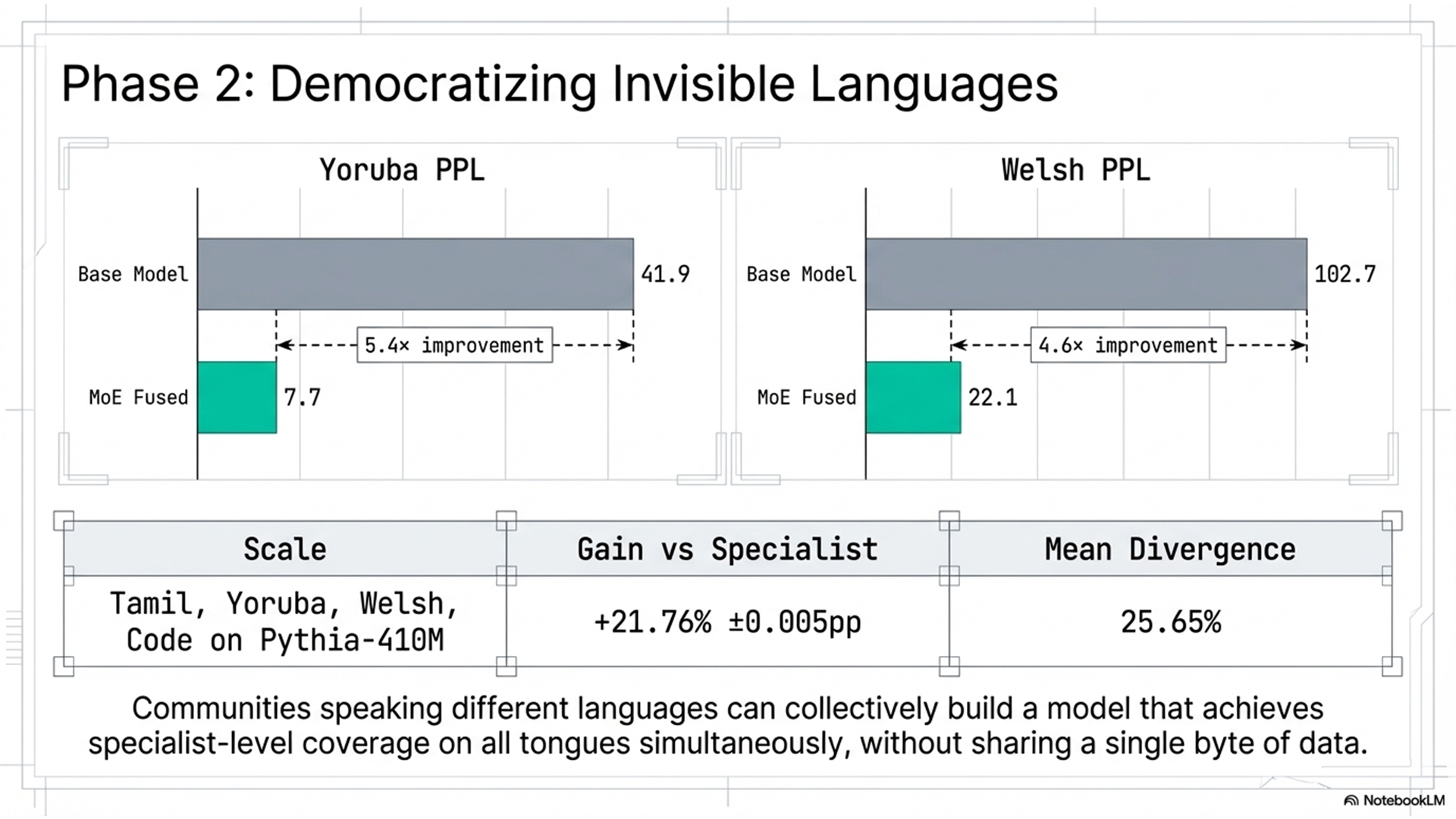
Specialists must become meaningfully different from the base. Below the divergence floor, fusion has little to select.
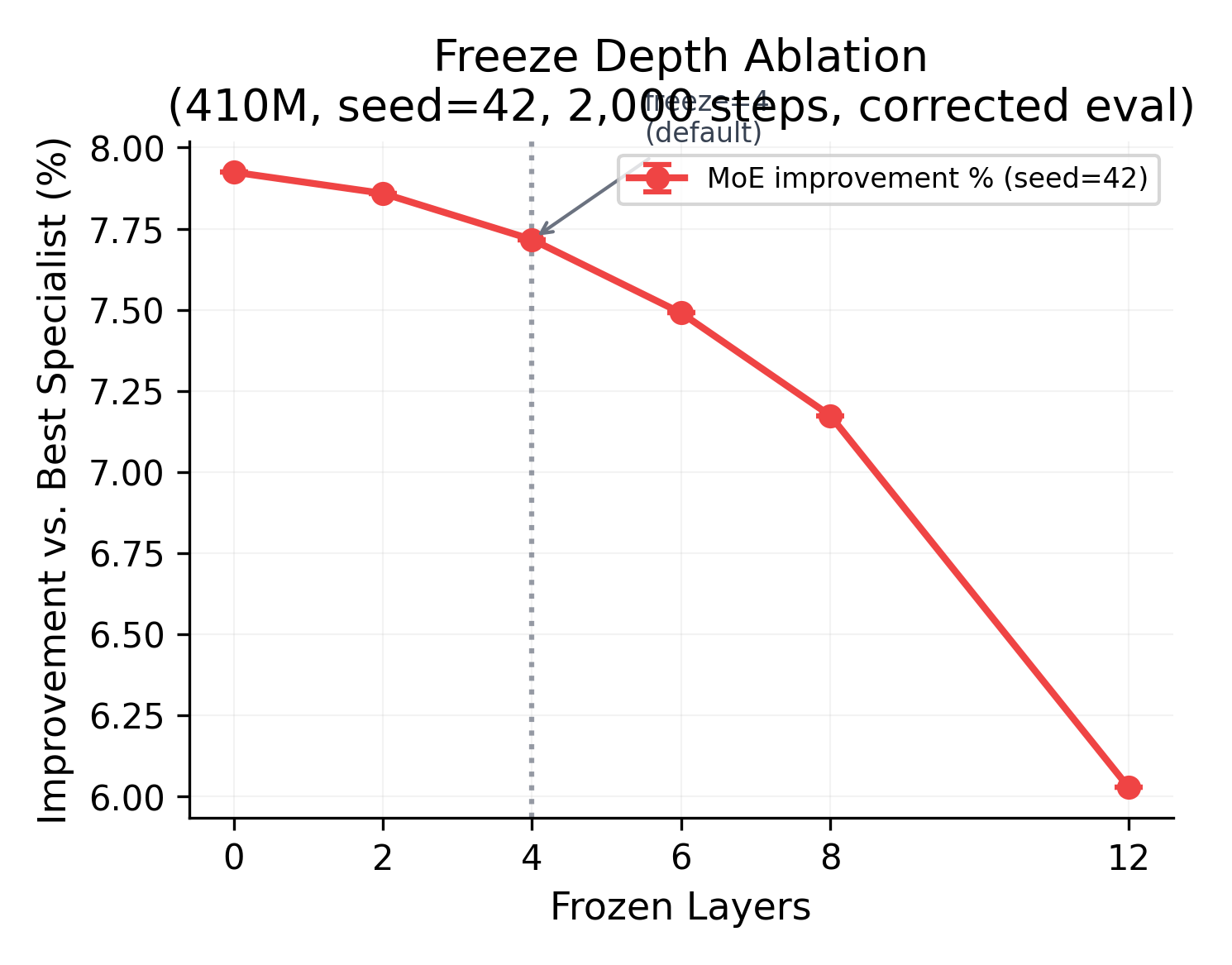
Beyond longer training horizons, freezing early layers preserves routing compatibility while allowing useful specialization.